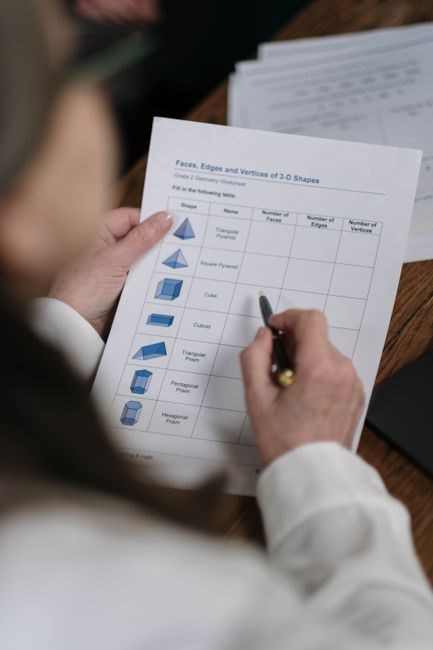
Grade 1 CogAT evaluates early reasoning. Free practice PDFs, such as those from TestPrep‑Online and Bhmschools.org, let children preview verbal, quantitative, and non‑verbal batteries. Early exposure builds confidence and helps identify gifted potential. Parents can access PDFs online easily.
Purpose and Structure of the CogAT

The CogAT, or Cognitive Abilities Test, is designed to assess a child’s reasoning abilities across three core domains: verbal, quantitative, and non‑verbal. The test is structured into nine sub‑tests—three per battery—allowing educators to pinpoint strengths and areas for growth. In first grade, the verbal battery emphasizes audio cues and picture‑based prompts, reflecting early literacy development and reducing reliance on written instructions. The quantitative battery introduces basic number patterns and simple arithmetic, while the non‑verbal battery challenges spatial and visual‑perceptual reasoning through shape manipulation and sequence tasks. Free practice PDFs from resources such as TestPrep‑Online and Bhmschools.org provide authentic sample questions, enabling students to familiarize themselves with the format, pacing, and question styles before the official assessment. Early exposure to these materials supports confidence, reduces test anxiety, and helps teachers identify gifted students who may benefit from enrichment programs. By engaging with practice tests, children develop critical thinking skills that serve them throughout their academic journey.
Each sub‑test is timed, with a typical duration of about 5 to 7 minutes, ensuring the entire assessment fits within a standard school period. The scoring system aggregates raw scores from each battery to produce a composite score that reflects overall cognitive ability. This design promotes fair assessment across diverse learnersfull.
Verbal, Quantitative, and Nonverbal Batteries
Grade 1 CogAT is divided into three batteries—verbal, quantitative, and nonverbal—each containing three sub‑tests that together assess a child’s reasoning across language, math, and spatial domains. The verbal battery emphasizes oral comprehension and picture‑based reasoning; students hear short audio prompts and choose the correct image from a set, mirroring classroom listening activities that build early literacy. The quantitative battery introduces basic number sequences, simple addition, and pattern recognition, encouraging children to count, compare, and predict outcomes. Nonverbal tasks focus on spatial reasoning and shape manipulation; learners rotate, fold, or match shapes to find the correct answer, strengthening visual‑perceptual skills that are foundational for later STEM learning. Free practice PDFs from TestPrep‑Online and Bhmschools.org provide authentic examples for each domain, allowing students to practice the exact format, pacing, and question style of the official assessment. By engaging with these materials, children build confidence, reduce test anxiety, and develop critical thinking skills that support future academic success. Educators can use the results to tailor enrichment programs, identify gifted students early, and monitor progress across the three batteries over time.
Scoring is based on the number of correct responses in each sub‑test, with raw scores converted into percentile ranks that compare a child’s performance to peers nationwide. The composite score reflects overall cognitive ability, while battery‑specific scores highlight strengths and growth areas. Early exposure to practice PDFs helps students acclimate to the test’s time limits—typically 5–7 minutes per sub‑test—and familiarizes them with the question formats, reducing uncertainty on test day. Parents and teachers can download free PDFs, print them, and conduct mock sessions at home or in the classroom, creating a low‑pressure environment that encourages repeated practice and mastery of key concepts. Consistent practice also builds test‑taking stamina, allowing students to maintain focus and accuracy throughout the full assessment. Try today.
Sub-test Breakdown for Grade 1
Grade 1 CogAT comprises nine sub‑tests, three per battery. The verbal battery contains Picture Matching, Sentence Completion, and Story Sequencing. Picture Matching asks children to choose the image that logically follows a given picture, testing visual inference. Sentence Completion requires selecting the word that best completes a short sentence, assessing emerging vocabulary and grammar. Story Sequencing presents a series of pictures and asks the student to arrange them in logical order, developing narrative understanding.
The quantitative battery includes Number Sequencing, Simple Addition, and Pattern Recognition. Number Sequencing presents a series of numbers with a missing element; students must identify the correct number to complete the pattern. Simple Addition asks for the sum of two one‑digit numbers, reinforcing basic arithmetic. Pattern Recognition challenges children to identify the rule governing a series of shapes or numbers and predict the next item.
The nonverbal battery offers Shape Manipulation, Paper Folding, and Spatial Arrangement. Shape Manipulation presents a shape and asks the student to choose the shape that results from rotating or reflecting the original. Paper Folding asks students to select the image that represents a paper after it is folded and cut, testing spatial visualization. Spatial Arrangement requires arranging a set of shapes into a specified configuration, assessing spatial planning.
Benefits of Early CogAT Practice
Early exposure to the CogAT’s verbal, quantitative, and non‑verbal batteries equips first‑grade learners with critical reasoning skills that transcend the test itself. By practicing picture‑matching, number sequencing, and spatial puzzles in a low‑stakes setting, children build confidence and reduce test anxiety, which research shows improves overall performance. Regular free PDF practice sessions reinforce vocabulary growth, arithmetic fluency, and visual‑spatial awareness, all of which correlate with higher academic achievement in later grades. Additionally, parents and teachers can identify individual strengths and gaps early, allowing targeted enrichment that nurtures gifted potential. The practice materials from TestPrep‑Online and Bhmschools.org are aligned with official test standards, ensuring that skills honed during practice translate directly to the actual assessment. Finally, consistent practice fosters a growth mindset, encouraging students to view challenges as opportunities for learning rather than obstacles. This holistic development supports not only test success but also lifelong learning habits.
Parents can download the PDFs and schedule regular practice sessions, ensuring children are comfortable with the test format. Teachers can integrate sample questions into classroom activities, providing feedback. The cumulative effect of consistent practice boosts confidence and performance, setting a strong foundation for future academic growth. It builds resilience now

Accessing Free Grade 1 CogAT Practice PDFs
Free Grade 1 CogAT PDFs are available from TestPrep‑Online and Bhmschools.org. These printable sheets mirror the test format, letting students practice verbal, quantitative, and non‑verbal tasks before the assessment. Students can print anytime.!!

Official TestPrep‑Online Resources
Bhmschools.org Sample PDFs
Bhmschools.org offers a curated set of Grade 1 CogAT sample PDFs that are freely downloadable. The collection contains practice batteries that mirror the official test format, including verbal, quantitative, and non‑verbal sections. Each PDF is organized by sub‑test, with clear instructions and answer keys for self‑assessment. Parents and teachers can use these documents to gauge a child’s readiness, identify strengths, and target areas for improvement. The site’s interface is simple: click the “Grade 1 CogAT” link, select the desired PDF, and save it to your device. Because the PDFs are in Adobe Reader format, they work on Windows, macOS, iOS, and Android platforms without additional software. The practice materials are updated annually to reflect any changes in the CogAT test structure, ensuring that students receive the most current practice experience. Additionally, Bhmschools.org provides printable worksheets that complement the digital PDFs, allowing for offline practice sessions. By integrating these resources into a regular study routine, students can build confidence and improve their reasoning skills in a structured environment. The PDFs include sample questions such as picture‑matching, number sequencing, and shape‑manipulation tasks that align with the three batteries. Each section is timed in the PDF to help learners develop pacing strategies. Users can track progress by comparing their answers to the provided key, and the site offers a brief explanation for each correct answer to reinforce learning. Overall, Bhmschools.org’s free Grade 1 CogAT PDFs serve as a comprehensive, accessible tool for early gifted education. Students can share results with teachers for personalized feedback.!!
Finding Reliable PDFs Online
When searching for free Grade 1 CogAT practice PDFs, start by locating the official test publisher’s website or a recognized educational authority. A reliable source will typically list the test name, grade level, and a clear download link. Verify the PDF’s file size and format—most authentic practice books are between 1 MB and 5 MB and use the standard .pdf extension. Before opening, scan the file for malware by checking the file’s digital signature or using an online virus scanner. Once opened, confirm that the document contains all nine sub‑tests: verbal, quantitative, and non‑verbal batteries, each with three sub‑tests. Look for a visible page count and a table of contents that matches the official test structure. The presence of an answer key at the end, accompanied by brief explanations, is a strong indicator of authenticity. Check that the PDF is not corrupted: pages should display correctly, images should load, and text should be selectable. If any page is blank or garbled, the file is likely incomplete. For additional assurance, compare the sample questions to known CogAT formats—picture‑matching, number sequencing, and shape‑manipulation tasks should appear in the same sequence. Finally, save the PDF to a secure location and back it up; this protects against accidental loss and allows you to share it with teachers or tutors for collaborative review. By following these steps, you can confidently download and use free CogAT practice PDFs that are both accurate and safe.
Parents should verify the PDF’s metadata matches the official title and 2026 publication date. A legitimate file lists “CogAT Grade 1 Practice” and contains no ads. Cross‑checking sample questions against the official handbook ensures consistency. content.!!

Ensuring PDF Quality and Compatibility
To guarantee that a free Grade 1 CogAT practice PDF is both reliable and functional, follow a systematic checklist. First, confirm the file’s origin: a reputable source such as TestPrep‑Online or Bhmschools.org will list the official title, grade, and publication year. Next, examine the file size—authentic practice books typically range from 1 MB to 5 MB. A file that is unusually small may be incomplete, while one that is excessively large could contain extraneous content. Open the PDF with a trusted viewer (Adobe Acrobat Reader, Foxit, or the built‑in viewer on macOS/iOS/Android) and verify that all pages render correctly; images should load, text should be selectable, and no page should appear blank or corrupted. Check the table of contents for the nine expected sub‑tests: verbal, quantitative, and non‑verbal batteries, each with three sub‑tests. An answer key at the end, accompanied by brief explanations, signals a complete set. Scan the file for malware by reviewing its digital signature or using an online virus scanner before opening. Finally, test the PDF on multiple devices—desktop, tablet, and smartphone to ensure consistent display and navigation. If the document fails on any platform, consider re‑downloading from a verified source or converting the PDF to a newer version (PDF‑1.7) using a reliable converter. By adhering to these steps, you can confidently use free CogAT practice PDFs that are accurate, secure, and compatible across common operating systems. All PDFs are PDF‑1.7.

Sample Questions and Test Strategies
Free Grade 1 CogAT PDFs offer picture matching, number sequencing, and shape manipulation. Practice by timing each section, reviewing explanations, and using the answer key to spot patterns. Consistent review builds speed and accuracy. Keep up daily.
Verbal Battery Sample: Picture Matching
In the free Grade 1 CogAT practice PDFs, the verbal battery often begins with picture‑matching tasks. A typical item presents two top images that are related by a common attribute—such as shape, color, or spatial orientation—followed by a bottom image that the student must pair with one of the top images. For example, the top row might show a blue square next to a green circle, while the bottom row shows a yellow triangle. The student must identify which top image shares the same color or shape as the bottom image and select the correct answer choice. The test designers emphasize visual reasoning over vocabulary, so the instructions are short and rely on the child’s ability to notice similarities and differences.
Strategies for success include: 1) Quickly scan the top row to note distinguishing features; 2) Compare each feature with the bottom image; 3) Eliminate answer choices that clearly do not match; 4) Use process of elimination to narrow down to one option. Practice with the free PDFs from TestPrep‑Online and Bhmschools.org, which provide instant feedback and explanations for each correct answer. Repeated exposure helps children internalize patterns and improves speed, which is crucial for the timed nature of the CogAT.

Teachers often use these PDFs to gauge early problem‑solving skills. By reviewing the answer key, students see why a particular image matches, reinforcing visual discrimination. Consistent practice builds confidence before the official test day. Enjoy learning

Quantitative Battery Sample: Number Sequencing
In the free Grade 1 CogAT practice PDFs, the quantitative battery includes number sequencing items that assess basic arithmetic patterns. A typical question shows a short series such as 2, 4, 6, __, 10, and asks the student to choose the missing number from four options. The patterns may involve simple addition, subtraction, multiplication, or alternating operations. For example, a series like 1, 3, 6, 10, __ uses triangular numbers, and the correct answer is 15. The free PDFs from TestPrep‑Online and Bhmschools.org provide a variety of such sequences, ranging from linear progressions to more complex alternating patterns. Students practice recognizing the rule quickly and applying it to find the correct answer.
Effective strategies include: 1) Identify the operation that links the first two numbers; 2) Apply that operation consistently to find the next term; 3) Check the final term to ensure the pattern holds; 4) Verify that the chosen answer fits the sequence. Teachers can use the answer key to explain why a particular option is correct, reinforcing the underlying arithmetic concept. Repeated practice with these PDFs helps children build mental math fluency and improves their ability to solve problems under time pressure. Enjoy learning.
Students who review each solution can identify common mistakes, such as misreading the sequence or applying the wrong operation. By practicing these items regularly, they develop confidence and speed, which are essential for the timed sections of the CogAT. Parents and teachers can track progress by comparing scores across practice sessions, ensuring continuous improvement. Well done.
Nonverbal Battery Sample: Shape Manipulation
Free Grade 1 CogAT PDFs present shape‑manipulation items that test spatial reasoning. A typical question shows a figure that is folded, cut, or rotated, and the student must choose the correct unfolded shape from four options. For example, a paper‑folding problem displays a square with a cut line and asks which picture represents the shape after unfolding. Students identify the missing side or the new orientation. Another common item shows a series of shapes that are rotated 90°, 180°, or 270°, and the child selects the shape that matches the pattern. The PDFs from TestPrep‑Online and Bhmschools.org include diagrams with clear labels, allowing learners to practice visualizing transformations. Strategies: 1) Observe the original shape’s features; 2) Determine the transformation (fold, cut, rotate); 3) Apply the same change mentally; 4) Match the result to the answer choices. Repeated practice builds confidence in spatial tasks, which are essential for the timed nonverbal section. Parents can review answer keys to explain why a choice is correct, reinforcing the concept of symmetry and transformation. Consistent use of these free resources helps children perform better on the actual CogAT and supports early STEM development. Good luck!
Use these PDFs to practice daily, track progress, and discuss strategies with teachers. The more you engage, the stronger your spatial reasoning will become. Keep the learning fun and challenging.
Great job!
Tips for Time Management During Practice Tests
Free Grade 1 CogAT PDFs give children a realistic sense of pacing. Start by timing the full test once to set a baseline. Then, break the nine sub‑tests into manageable chunks: 2 minutes per verbal item, 3 minutes per quantitative, and 4 minutes per non‑verbal. Use a small timer or a stopwatch to keep track. If a question stalls, mark it and move on; return only if time remains. Practice “skipping” by quickly glancing at the answer choices to gauge difficulty. For verbal picture‑matching, identify the key image first; for quantitative sequencing, write down the pattern before choosing. For non‑verbal shape manipulation, sketch the transformation on a separate sheet. Keep a running tally of correct answers to avoid double‑checking. After each practice session, review the time spent on each section and adjust your strategy. Consistent practice with free PDFs from TestPrep‑Online and Bhmschools.org helps children internalize timing cues, reducing test anxiety and improving overall performance. During practice, encourage children to pause briefly after each answer to confirm their choice, then move on. This habit builds confidence and prevents overthinking. Additionally, using a timer app on a phone or tablet can help them visualize remaining time. Parents should review the results together, highlighting patterns in mistakes and celebrating correct answers. By integrating these strategies, students develop a balanced approach that maximizes accuracy while staying within the allotted time, preparing them for the real CogAT environment. They build confidence!!!