Article Plan: Maritime English for Warships Officers (PDF Focus)
This article explores vital Maritime English skills for naval officers, focusing on PDF resources for mastering communication, security, and technical terminology in modern naval operations.
Maritime English, a specialized language of the sea, is paramount for warship officers navigating increasingly complex global scenarios. Proficiency extends beyond basic nautical terms, encompassing precise communication vital for safety, security, and effective operations. The rise of gray zone activities, as highlighted by recent analyses of Chinese maritime behavior near Taiwan, demands unambiguous reporting utilizing standardized English phrasing.
Furthermore, the escalating focus on cybersecurity, with the Coast Guard’s advancements and the need to report incidents effectively, necessitates a strong command of relevant terminology. Collaboration with international navies and shipyards – like those in South Korea – requires clear, concise English for technical discussions and maintenance procedures. Accessing and understanding crucial documents, often distributed as PDFs (like the National Security Strategy), is also dependent on strong language skills.
The Importance of Standard Maritime Communication
Standardized Maritime English minimizes ambiguity, crucial in high-stakes naval environments where miscommunication can have severe consequences. The increasing prevalence of maritime security incidents – including smuggling, illegal fishing, and potential cyberattacks – demands precise reporting, relying on universally understood terminology. Analyzing AIS data to identify potential gray zone activities, as seen with Chinese vessels near Taiwan, requires consistent language for effective intelligence sharing.
Moreover, joint operations with international navies necessitate a common linguistic framework. Effective communication extends to technical discussions with shipyards, like those in South Korea, regarding maintenance and new builds. Utilizing PDF resources, such as the SOLAS Convention and NSS documents, requires a strong grasp of standard maritime phrasing for accurate interpretation and implementation.
SOLAS Convention and its Impact on Naval Vessels
While primarily designed for civilian vessels, the Safety of Life at Sea (SOLAS) Convention significantly influences naval operations, particularly concerning safety standards and emergency procedures. Understanding SOLAS terminology, often found in PDF documentation, is vital for interoperability during joint exercises and humanitarian aid missions. The convention’s focus on maritime security, including measures against threats like drug trafficking, aligns with naval security objectives.
Naval officers must comprehend SOLAS requirements related to communication equipment, navigation safety, and fire protection. Proficiency in Maritime English allows for accurate interpretation of SOLAS regulations and their application to warship operations. Furthermore, understanding how coastal authorities, like the Taiwan Coast Guard, utilize SOLAS principles in their law enforcement activities provides valuable context.
International Regulations for Preventing Collisions at Sea (COLREGS)
COLREGS are foundational to safe navigation, and mastery of the precise Maritime English used within these regulations is paramount for warship officers. PDF resources detailing COLREGS, including light signals, sound signals, and maneuvering rules, are essential study materials. Accurate interpretation prevents misunderstandings that could escalate into dangerous situations, especially in congested waters or during international naval exercises.
Understanding COLREGS extends beyond rote memorization; officers must apply the rules in complex scenarios, often involving gray zone activities where identifying intent is crucial. Analyzing AIS data, as highlighted in recent reports, requires a firm grasp of COLREGS terminology to assess potential risks and report observations effectively. Proficiency ensures adherence to international law and promotes maritime security.
Core Maritime English Terminology for Warship Officers
A robust vocabulary is the cornerstone of effective communication at sea. Warship officers require specialized Maritime English encompassing navigation, engineering, security, and operational terms. PDF glossaries and training manuals focusing on this terminology are invaluable resources. These documents should cover everything from shipboard systems to reporting procedures, ensuring clarity during critical operations.
Given the increasing focus on cybersecurity and gray zone activities, officers must also understand related terminology for incident reporting and data analysis. Furthermore, proficiency extends to technical discussions with international partners, like South Korean shipyards, during maintenance and repair collaborations. Mastering this core lexicon, often found in PDF format, is vital for operational success.
Navigation Terms: Essential Vocabulary
Precise navigation demands a shared understanding of specific terminology. Warship officers must be fluent in terms relating to position, course, speed, and distance – often detailed within PDF navigational guides. Key vocabulary includes headings, bearings, latitude/longitude, and chart symbology. Understanding collision regulations (COLREGS) terminology is paramount, as is proficiency in reporting procedures.
Modern navigation increasingly relies on digital systems, necessitating familiarity with terms related to AIS data, GPS, and electronic charting. PDF resources detailing these technologies are crucial. Furthermore, officers operating in polar regions require specialized vocabulary related to ice navigation and charting, ensuring safe passage and effective operations in challenging environments.
Engineering Terms: Understanding Ship Systems
Effective communication regarding shipboard systems is vital for warship officers. A strong grasp of engineering terminology, often found within detailed PDF technical manuals, is essential for coordinating maintenance, troubleshooting issues, and collaborating with engineering personnel. Key terms encompass propulsion systems, power generation, auxiliary machinery, and damage control equipment.
Given the increasing reliance on international shipyards – like those in South Korea – for maintenance and new builds, officers must understand technical documentation and reporting in English. PDF resources detailing specific ship systems, alongside standardized reporting formats, are crucial. Furthermore, understanding terminology related to unmanned systems and emerging naval technologies is becoming increasingly important.
Utilizing PDF Resources for Maritime English Learning
PDF documents are invaluable tools for warship officers enhancing their Maritime English proficiency. Official publications from organizations like the IMO and various Nautical Institutes provide comprehensive glossaries, procedural guides, and regulatory information. These resources often contain specialized terminology related to navigation, engineering, security, and international maritime law.
Effective learning involves more than simply reading. Utilizing annotation tools within PDF readers to highlight key terms, add notes, and create summaries is crucial. Officers should actively seek out and study PDF versions of national security strategy documents (NSS) and white papers to understand geopolitical contexts. Mastering these resources builds a strong foundation for clear communication.
Identifying Reliable PDF Sources (IMO, Nautical Institutes)
For warship officers, sourcing accurate Maritime English PDFs is paramount. The International Maritime Organization (IMO) provides crucial documents like SOLAS conventions and related circulars, essential for understanding safety regulations. Reputable Nautical Institutes, such as those offering officer certifications, publish training materials and best practice guides in PDF format.
Government agencies’ websites often host national security strategies (NSS) and white papers detailing maritime policy. Be cautious of unofficial sources; prioritize PDFs directly from recognized authorities. Cross-referencing information across multiple sources ensures accuracy. Prioritize documents addressing current challenges like cybersecurity, gray zone activities, and Arctic operations for relevant, up-to-date terminology.
Effective PDF Annotation and Study Techniques
Maximizing learning from Maritime English PDFs requires strategic annotation. Utilize PDF readers’ highlighting tools to mark key terminology – COLREGS, engineering terms, security protocols – and create concise notes in the margins. Focus on phrases used in reporting procedures and incident documentation.
Employ spaced repetition: revisit annotated PDFs at increasing intervals. Create flashcards for challenging vocabulary, particularly related to unmanned systems or polar operations. Practice translating technical documentation, like shipyard collaboration reports (e.g., from South Korea). Regularly review NSS documents to understand the geopolitical context influencing maritime communication. Active recall strengthens retention.
Communication Protocols on Warships
Effective warship communication demands strict adherence to standardized protocols. Internal systems rely on clear, concise phrasing – minimizing ambiguity is crucial, especially during high-pressure scenarios. External communications, like reporting gray zone activities (AIS data analysis), require precise language and adherence to established formats.
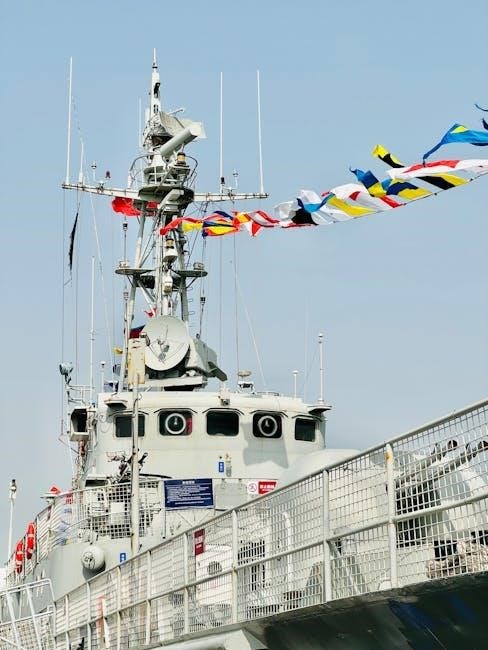
Officers must master reporting procedures for cybersecurity incidents, utilizing specific terminology. Joint operations with international navies necessitate understanding nuanced communication styles and potential linguistic barriers. Proficiency in Maritime English ensures seamless information exchange, vital for maintaining operational readiness and responding to evolving geopolitical challenges, as highlighted in recent NSS assessments.
Internal Communication Systems & Standard Phrases
Warship internal communication relies heavily on standardized phrases and protocols to ensure clarity and speed. Systems range from traditional voice pipes to modern digital networks, demanding officers’ fluency in both. Standard phrases cover damage control, navigation updates, and engineering reports – minimizing misinterpretation is paramount.
PDF resources should emphasize these core phrases, alongside examples of proper radio etiquette. Effective communication during cybersecurity breaches, as the Coast Guard prioritizes, requires precise terminology. Mastering these systems is vital for coordinated responses to threats, especially considering the rapid technological disruption impacting naval operations and the need for swift, accurate reporting.
External Communication: Reporting Procedures & Formats
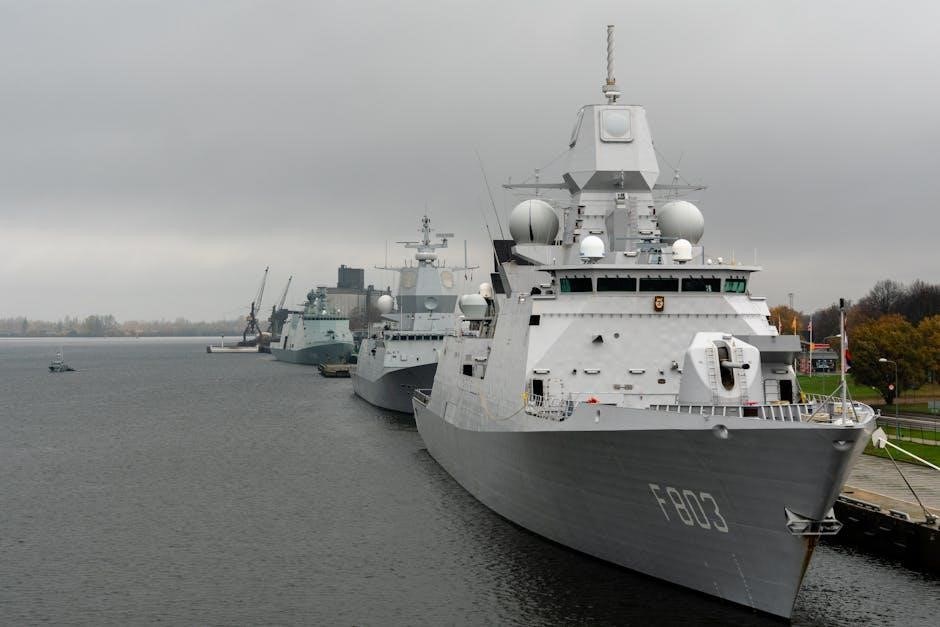
Precise external reporting is crucial for warships, encompassing everything from routine position reports to critical incident notifications. Standard formats, often dictated by international agreements, demand accurate English usage. Reporting on “gray zone activities” near Taiwan, utilizing AIS data, necessitates detailed and unambiguous descriptions.
PDF guides should detail these procedures, including formats for maritime security incidents and cybersecurity breaches – areas the Coast Guard is actively bolstering. Understanding National Security Strategy (NSS) communication requirements is also vital. Officers must be proficient in conveying information to international navies during joint operations, ensuring interoperability and avoiding misunderstandings.
Maritime Security & English Language Proficiency
Effective maritime security relies heavily on clear English communication. Reports concerning smuggling, illegal fishing, or drug trafficking – as highlighted by the Taiwan Coast Guard – require precise terminology. Identifying Chinese “gray zone activities” demands accurate descriptions of vessel behavior, utilizing AIS data analysis, and conveying this information concisely.
PDF resources should emphasize vocabulary related to maritime law enforcement and incident reporting. Cybersecurity incident reporting, a growing concern for the Coast Guard, also necessitates specialized English proficiency. Understanding and articulating potential threats, and coordinating responses with international partners, depend on fluent and accurate communication.
Gray Zone Activities & Precise Reporting (AIS Data Analysis)
Naval officers must master the English terminology for describing ambiguous maritime activities – “gray zone” operations. PDF study materials should focus on accurately reporting observations derived from Automatic Identification System (AIS) data. This includes vessel tracking, identifying unusual patterns, and correlating data with reported fishing effort or military drill zones.
Precise language is crucial when flagging civilian vessels potentially engaged in state-directed operations. Reports must clearly articulate observed behaviors, avoiding ambiguity. Training PDFs should include exercises on constructing concise, factual reports, suitable for intelligence analysis and informing strategic decision-making. Accurate English communication is vital for effective maritime domain awareness.
Cybersecurity Terminology & Incident Reporting
Warship officers require a robust understanding of cybersecurity terminology, readily accessible through dedicated PDF resources. These materials should cover incident reporting protocols, emphasizing clear and concise English descriptions of cyberattacks, vulnerabilities, and system compromises. Familiarity with terms related to network intrusion, malware, and data breaches is paramount.
PDFs should detail standardized reporting formats, ensuring consistent communication of cyber incidents to relevant authorities. Given the Coast Guard’s expanding cyber authorities and workforce, officers must accurately articulate technical details in English. Effective incident reporting, utilizing precise language, is critical for bolstering maritime cybersecurity and protecting naval assets.
Navigating Geopolitical Challenges with Maritime English
PDF resources must equip warship officers with the linguistic tools to navigate complex geopolitical scenarios at sea. Understanding the nuances of National Security Strategy (NSS) documents, often mirroring classical maritime strategy, requires advanced English comprehension. Officers must be able to interpret and articulate strategic objectives related to economic power and regional security.
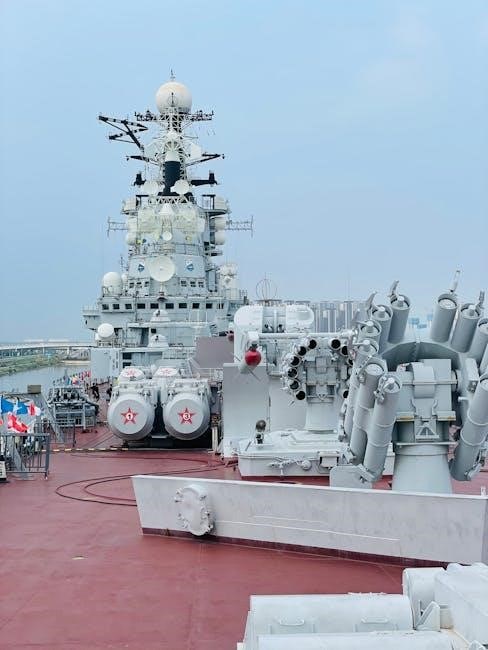
Specifically, PDFs should focus on terminology related to gray zone activities, particularly concerning areas like the Taiwan Strait, where precise reporting of Chinese maritime actions – utilizing AIS data analysis – is crucial. Clear English communication is vital when interacting with international navies during joint operations, demanding a shared understanding of geopolitical contexts.
Understanding National Security Strategy Documents (NSS)
PDF study guides for warship officers must deconstruct the complex language within National Security Strategy (NSS) documents. The 2025 NSS, exhibiting “undercurrents of a classical maritime document,” demands officers discern connections between strategy and economic power, recognizing historical allusions like the Roosevelt Corollary.
Effective PDFs should provide glossaries of key NSS terms, focusing on maritime implications. Officers need to analyze how NSS directives translate into operational orders and communication protocols. Comprehending the NSS’s strategic vision is paramount for navigating geopolitical challenges and ensuring consistent messaging during international engagements. This requires dedicated English language training focused on policy analysis.
Communication in Joint Operations with International Navies
PDF resources for warships officers must prioritize standardized Maritime English for seamless joint operations. Clear communication prevents misunderstandings during complex exercises and real-world scenarios. These PDFs should include phrasebooks covering common operational requests, reporting formats, and emergency procedures, tailored for multinational environments.
Emphasis should be placed on overcoming linguistic barriers and understanding cultural nuances in communication. Training materials should address potential ambiguities in terminology and promote concise, unambiguous messaging. Effective PDFs will also detail protocols for utilizing international naval signals and adhering to agreed-upon communication frequencies, ensuring interoperability and mission success.
Future Trends in Maritime English & Naval Technology
PDF learning materials for warships officers must adapt to rapidly evolving naval technology. The rise of unmanned systems demands new terminology related to autonomous vessel operation, data links, and remote control protocols. Cybersecurity incident reporting, detailed in recent Coast Guard updates, requires precise English for effective communication.
PDFs should incorporate glossaries defining terms associated with Artificial Intelligence, machine learning, and data analytics as applied to maritime operations. Furthermore, resources must address the language of Arctic operations, including icebreaker terminology, given increasing geopolitical focus. Staying ahead requires continuous updates reflecting technological disruption and emerging threats.
Unmanned Systems & New Terminology
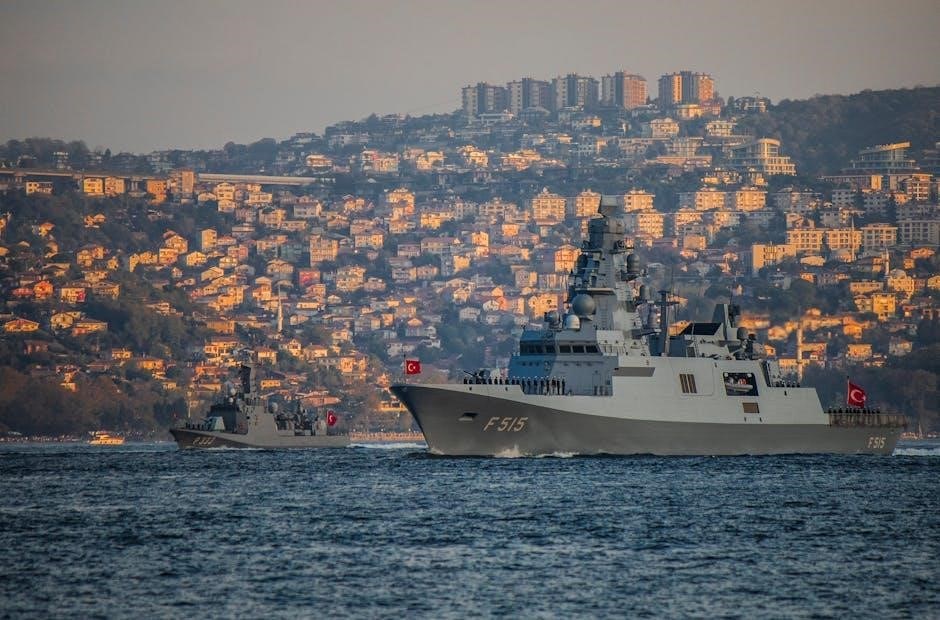
PDF resources for warships officers must prioritize the expanding lexicon of unmanned systems. Terms like “autonomous surface vessel (ASV),” “remotely operated vehicle (ROV),” and “unmanned aerial system (UAS)” are now critical. Understanding data link protocols, sensor integration, and command-and-control systems requires specialized vocabulary.
Effective PDF guides should include sections on interpreting data from these systems, including AIS tracking analysis for identifying potential gray zone activities near Taiwan, as highlighted in recent reports. Cybersecurity terminology related to unmanned systems vulnerabilities is also essential. Officers need precise language for reporting incidents and coordinating responses in this evolving domain.
Adapting to Rapid Technological Disruption
PDF learning materials for warships officers must address the accelerating pace of technological change. The U.S. Navy faces critical fleet readiness gaps due to China’s shipbuilding surge, demanding rapid adaptation. PDFs should focus on terminology related to new naval technologies and maintenance collaboration with shipyards like those in South Korea.
Cybersecurity is paramount; resources must cover incident reporting and the evolving threat landscape, leveraging the Coast Guard’s expanded cyber authorities. Understanding the language of “One Big Beautiful Bill Act” funding and data-driven frameworks for identifying gray zone activities is crucial. Officers require PDFs that facilitate continuous learning in this disruptive environment.
Polar Operations and Specialized Maritime English
PDF resources for warships officers operating in polar regions require specialized maritime English terminology. The United States urgently needs to recapitalize its polar icebreaker fleet to address national security risks in the Arctic, necessitating focused language training. PDFs should cover icebreaker operations, unique terminology related to ice navigation, and Arctic maritime security protocols.
Effective communication is vital in these challenging environments. Resources must address reporting procedures specific to polar operations and the nuances of international collaboration. Understanding the geopolitical implications of Arctic activity, and the associated English language requirements, is paramount for modern naval officers.
Icebreaker Operations: Unique Terminology
PDF learning materials for warships officers must prioritize icebreaker-specific terminology. This includes understanding ice classes, ice accretion, and the various methods of icebreaking – from direct ramming to pendulum breaking. Resources should detail terminology related to ice resistance, hull strength, and the operation of ice-strengthened vessels.
Furthermore, officers require proficiency in describing ice conditions – thickness, type, concentration – and communicating effectively during ice navigation. PDFs should include glossaries and practical exercises focusing on reporting ice observations and coordinating maneuvers in icy waters. Accurate and concise language is critical for safety and mission success.
Arctic Maritime Security & Communication Protocols
PDF resources for warships officers operating in the Arctic must emphasize specialized communication protocols. Given the increasing national security risks, mastering terminology related to surveillance, domain awareness, and reporting of unusual activity is crucial. This includes understanding how to articulate observations regarding foreign vessel presence and potential gray zone activities.
Effective communication requires precise language when describing vessel behavior, utilizing AIS data, and reporting potential security threats. PDFs should incorporate scenario-based exercises focusing on reporting procedures and coordinating with international partners. Proficiency in Arctic-specific maritime law and security protocols is also essential.
Ship Maintenance & Repair – English for Technical Discussions
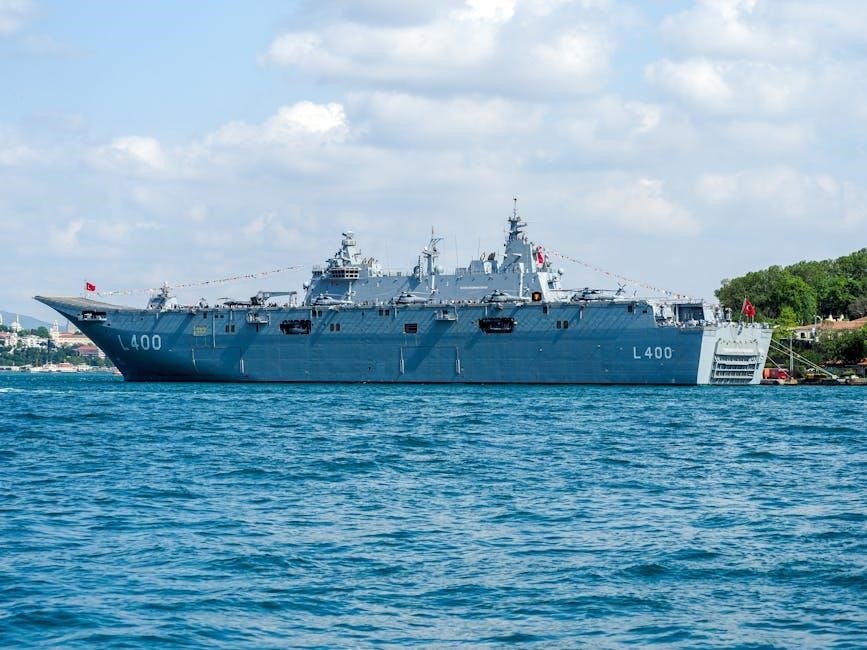
PDF guides for warships officers must prioritize English proficiency for technical discussions, particularly when collaborating with international shipyards like those in South Korea. These resources should focus on detailed terminology related to ship systems, component failures, and repair procedures. Accurate communication is vital for effective collaboration and ensuring fleet readiness.
PDFs should include glossaries of technical terms, sample technical reports, and exercises simulating discussions with shipyard personnel. Officers need to confidently articulate complex issues, understand technical documentation, and clearly convey repair requirements. Mastering this specialized language minimizes misunderstandings and optimizes maintenance outcomes.
Collaboration with Shipyards (e.g., South Korea)
PDF learning materials for warships officers must address the nuances of collaborating with shipyards, exemplified by South Korea’s world-class facilities. These resources should emphasize clear, concise English for discussing complex repairs, new builds, and supply chain logistics. Cultural awareness, alongside technical language, is crucial for successful partnerships.
PDFs should include example dialogues, contract terminology, and quality control procedures. Officers require proficiency in describing technical specifications, negotiating repair schedules, and resolving potential issues. Effective communication minimizes delays, ensures quality workmanship, and strengthens the U.S. Navy’s maritime strength through international collaboration.
Technical Documentation & Reporting
Warship officers require specialized PDF resources focused on precise technical documentation and reporting. These materials must cover incident reports, maintenance logs, and damage assessments, demanding a high level of English proficiency. Accurate descriptions of engineering issues, cybersecurity breaches, and system failures are paramount.
PDFs should include standardized reporting formats, common abbreviations, and examples of clear, unambiguous language. Officers must be able to interpret complex schematics, write detailed repair requests, and communicate effectively with technical personnel. Proficiency in this area ensures proper record-keeping, facilitates efficient repairs, and supports informed decision-making.